Wisconsin Parental Choice Program Approved
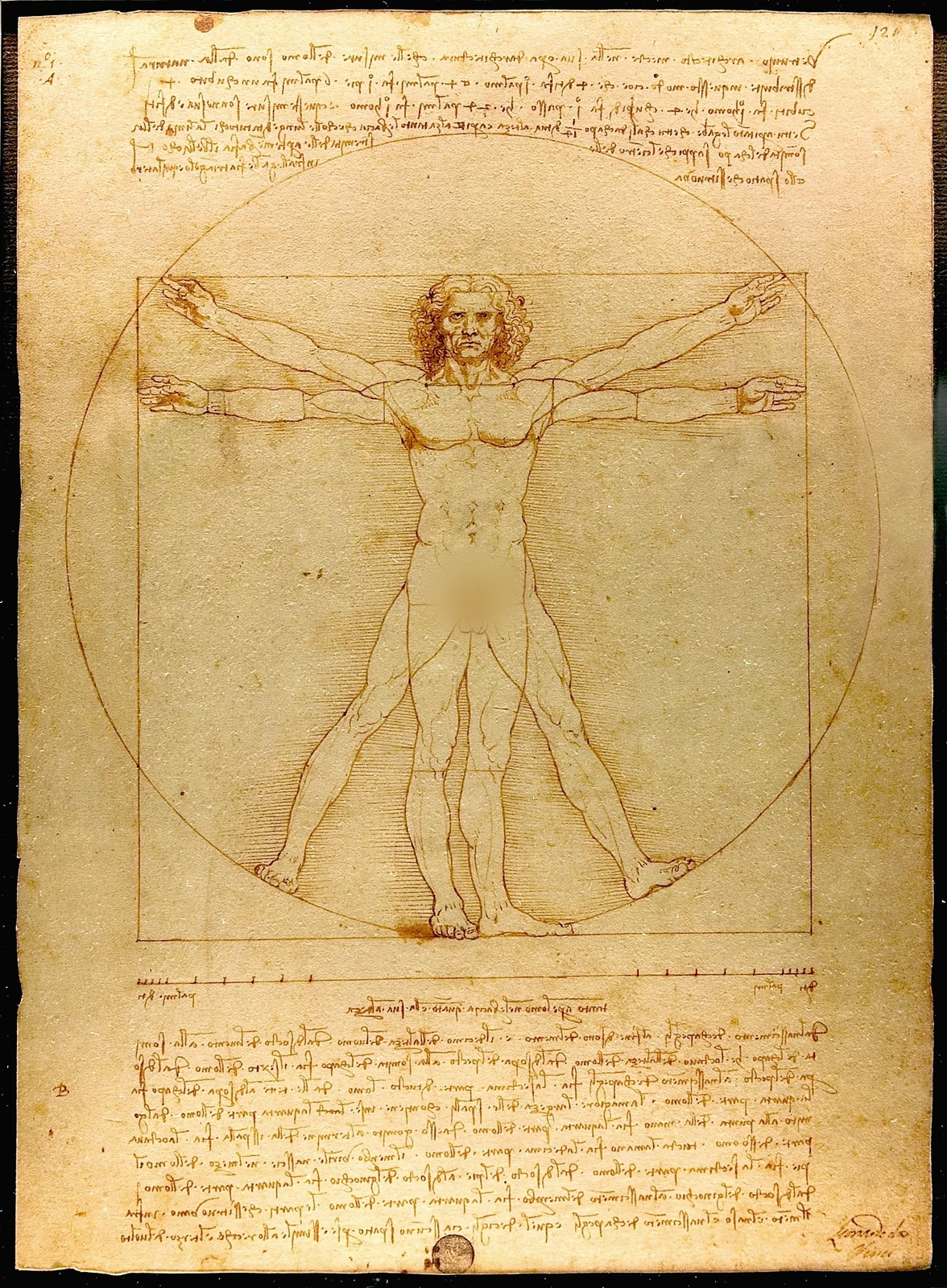
Leonardo da Vinci — Vitruvian Man
Home/Academics/Mathematics
Mathematics

God geometrizes. Students discover.

Deus geometrizat. God geometrizes.

Singapore Mathematics in the early grades, Algebra I by eighth grade, and the classical sequence through Calculus — math taught as a language in which the cosmos was authored.

Mathematics as Discovery

A subject most students fear. We make them love it.

Mathematics is the language in which the cosmos was authored. Taught well, it produces wonder. Taught poorly, it produces despair. Most American math instruction is the second kind.

VCA Virtual's mathematics program builds slow, deep, durable mastery. We teach the Singapore method in K–5 — one of the most rigorous primary math curricula in the world — and follow with the classical Pre-Algebra → Algebra I → Geometry → Algebra II / Trig → Calculus sequence. Most of our students reach Algebra I in eighth grade. The strongest reach Calculus by senior year.

In plain English: your Scholar learns math the way Scholars learn music — slowly, deeply, with patient mastery before moving on. No “five different ways to add 7+8.” No calculator from 4th grade. No homework parents can’t help with because the “new method” doesn’t make sense. By 8th grade most students hit Algebra I. By 12th, many reach Calculus. And along the way, most of them stop being afraid of math.

Why Singapore Math

One of the world’s most successful primary math curricula.

Singapore consistently ranks at the top of international math assessments. The secret is not speed but depth — concrete-pictorial-abstract progression that builds true understanding.

I

Concrete-Pictorial-Abstract

Every concept is taught first with manipulatives, then with pictures, then with abstract symbols. Students never just memorize — they see why the math works.

In plain EnglishYour kindergartener uses real blocks to figure out what 4+3 is. Then they draw it. Then they write “4+3=7.” By the time they see the symbol, they already know what it means. No memorizing tricks they can’t explain.
II

Bar Models

Singapore's signature visual tool. Word problems become diagrams. Even kindergartners learn to model algebra-style problems before they meet algebra.

In plain EnglishYour 2nd-grader sees “Sarah has twice as many apples as Tim. Together they have 12. How many does each have?” and draws bars to solve it. By 5th grade they handle algebra-level word problems — before they’ve ever seen an x or a y.
III

Number Bonds

Decomposition of numbers into parts. The foundation of mental math. Students don't carry and borrow blindly — they see what addition and subtraction are.

In plain EnglishYour Scholar learns that 8 is 5+3 and 6+2 and 7+1. Then 38 is 30+8. Then 538 is 500+38. They do mental math while other Scholars reach for a calculator. The whole arithmetic system makes sense to them — not as procedures, but as how numbers really work.
IV

Mastery, Not Spiral

One concept fully mastered before moving on. No "spiral" curriculum that revisits everything every year and masters nothing. Each year is a new layer on the last.

In plain EnglishWe finish fractions before we move past fractions. Most American curricula re-teach fractions every year from 3rd through 8th grade — and most kids still can’t do them. We do them once, deeply, and move on. That’s the difference.
The Sequence

From counting to calculus.

Twelve years of carefully sequenced mathematics. Most students reach Algebra I in 8th grade; the strongest reach Calculus by 12th.

K-5

Singapore Primary

Number sense, operations, fractions, decimals. The CPA progression and bar models. By 5th grade students solve word problems algebraically — without algebra.

6-7

Fundamentals & Pre-Algebra

Fundamentals of math in 6th, Pre-Algebra in 7th. Ratios, proportions, signed numbers, exponents — the shift from arithmetic to algebraic thinking.

8-9

Algebra I & Geometry

Algebra I in 8th grade. Geometry (Euclid as primary text where pacing allows) in 9th — proof-based.

10-12

Algebra II to Calculus

Algebra II / Trigonometry in 10th. Calculus I and II in 11th and 12th for the strongest students. Alternative tracks available for paths that don't require Calculus.

Math as Wonder

Why Euclid?

Most modern geometry courses teach proofs as a chore. Students memorize a list of theorems and forget them by the next test. The classical alternative is to teach geometry from Euclid himself — the most successful textbook in history, used continuously for two thousand years.

Euclid begins with the simplest possible definitions and builds, proposition by proposition, to staggering results. A student who has worked through Euclid has not just learned geometry. They have learned what it means to prove something — and that is a skill no other subject teaches as cleanly.

Where pacing permits, our high-school geometry course incorporates Euclid directly. Where it does not, a strong textbook approach with Euclidean priorities serves the same end: mastery of proof, not memorization of theorems.

In plain EnglishMost high schoolers memorize the Pythagorean theorem. Yours proves it. Same with every other major theorem. By the end of geometry, your Scholar doesn’t just know geometry — they know what it means to demonstrate a thing is true. That kind of thinking transfers everywhere: to logic, to law, to science, to argument.
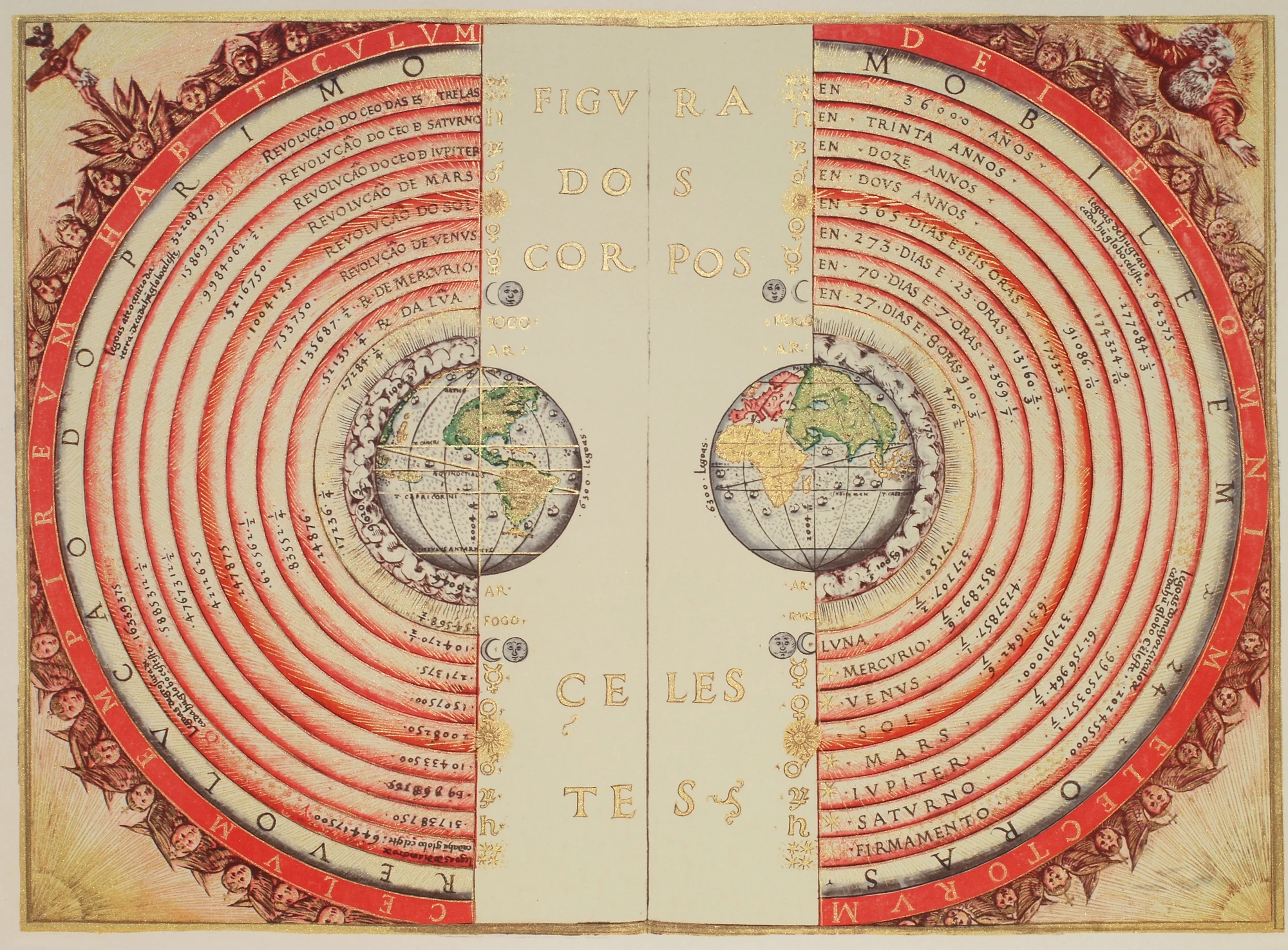
Ptolemaic spheres — Bartolomeu Velho
"The book of nature is written in the language of mathematics." — Galileo
✝︎
“Thou hast ordered all things in measure, and number, and weight.”
Wisdom 11:20 · RSV-CE
Inside the Curriculum

See it for real.

Public materials from Great Hearts Online — the same curriculum delivered through VCA Virtual. Click any card to see what the actual coursework looks like.

Math course preview
Sample Course

Math — 5th Grade

What an actual semester of 5th-grade math covers: the back end of Singapore Primary — multi-digit operations, fractions, decimals, word problems with bar models. Live morning Zoom seminars, syllabus PDF on the page.

View the course →
STEM at Great Hearts
STEM Philosophy

STEM at Great Hearts

Why classical math and science training produces students who out-perform on AP, SAT, and college science — without the gimmicks of a typical “STEM curriculum.” The case for depth over speed.

Read the article →
The Senior Thesis
Senior Capstone

The Senior Thesis

The capstone of every Great Hearts graduate: an original thesis defended orally before a panel. The same kind of rigorous proof-and-defense the math sequence has been training all twelve years.

Read the article →

VCA Virtual’s classical pathway uses the Great Hearts published K–12 scope and sequence. Links open at greatheartsonline.org and greatheartsamerica.org for transparency.

Other Paths at VCA Virtual

Classical isn’t the only path. It’s simply the heart.

VCA Virtual delivers two additional non-classical pathways for scholars whose road through the Christian school day looks different.

Math, Done Right

A subject your Scholar can love.

Singapore Math, taught patiently, produces students who actually understand mathematics — not students who fear it. The classical sequence does the rest.